Historical fiction writers must be comfortable in the gaps between the known and the unknown. Not just comfortable, but adept at navigating the research, the weighing of contradictory sources, the reasoning about what is plausible, and ultimately, committing to a version of events that comes to life on the page.
The Battle of Svolder (aka Svold or, in Old Norse, Svölðr) is one of the finest examples of this challenge I’ve encountered in ~thirty years of writing about the Viking Age. It is a battle that undeniably occurred, fought by historical figures whose names appear across multiple independent sources. And yet almost every significant detail — when it happened, where it happened, who exactly was involved, and what became of the man at its center — remains disputed, uncertain, or simply unknown.
This is the story of that battle. And the story of how I wrote it.
What we know
The Battle of Svolder was one of the most significant naval engagements in Viking Age history. On that much, the sources agree.
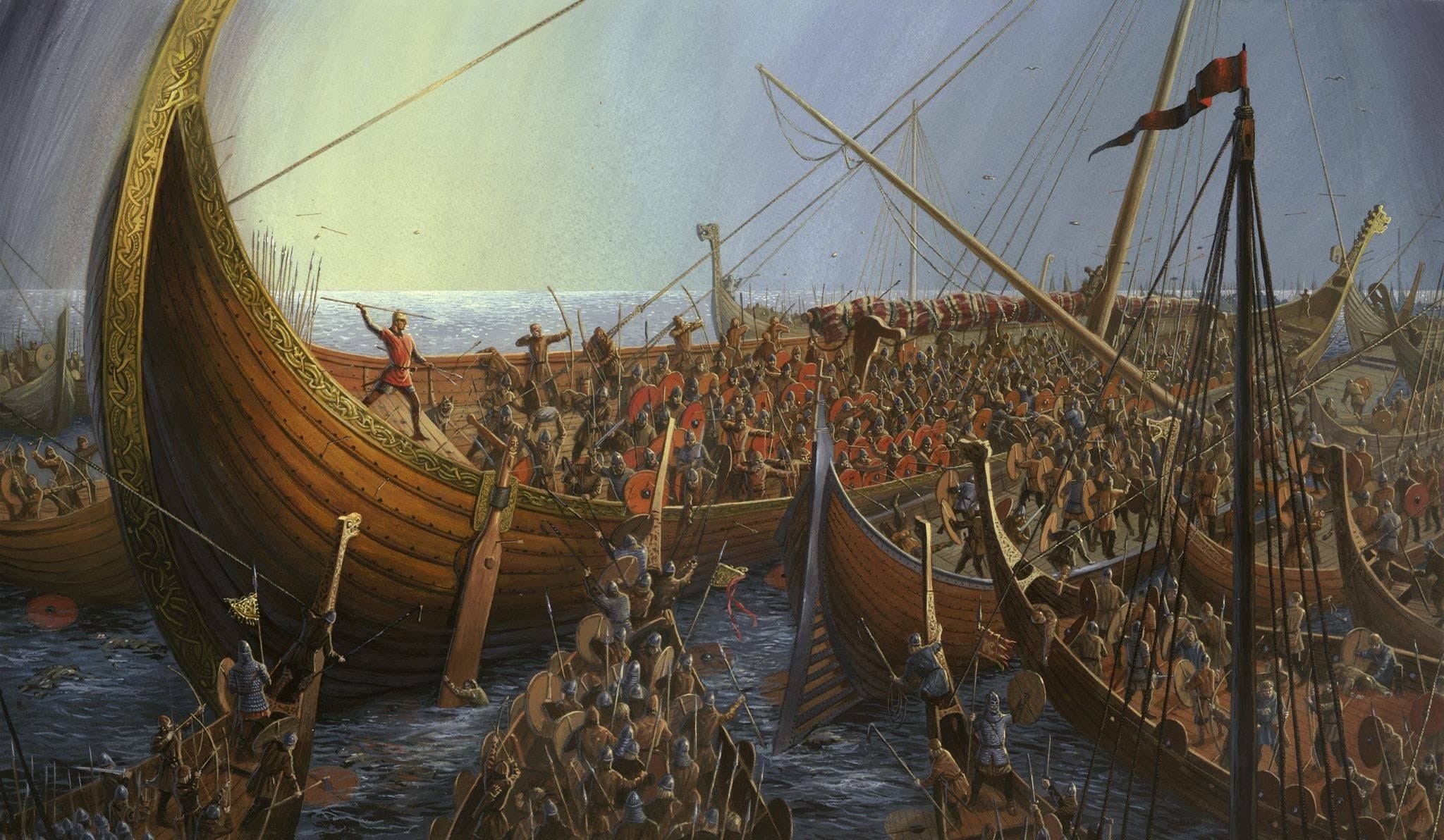
King Olaf Tryggvason of Norway was ambushed by a coalition of powerful enemies. Olaf’s fleet was outnumbered. He made his last stand aboard his magnificent flagship, the Ormen Lange (meaning, the Long Serpent), and from there he either fell or dove into the sea.
Norway was subsequently divided between the victors. The battle effectively ended Olaf’s short reign and reshaped the political map of Scandinavia for decades to come.
That much is the settled record. Beyond it, the history becomes considerably murkier.
Here’s where the sources differ
When did it happen?
Most historians believe the Battle of Svolder took place in early September — possibly September 9th. As for the year, the sources give us either AD 999 or AD 1000, and neither can be confirmed with certainty.
Where did it take place?
This is where the disagreement becomes genuinely complex. Adam of Bremen, writing around 1080, places the battle in the Øresund — the strait dividing modern Denmark from Sweden. The Norwegian and Icelandic sagas, including Heimskringla, place it near “an island called Svold” — a name that appears nowhere on any surviving map. The general belief is that his place was a small island off the coast of Rugen. Fagrskinna speaks of “an island off the coast of Vinðland.” Ágrip and Historia Norwegie have it off Zealand. In other words: the sources cannot agree on a location, and the place name that gives the battle its name cannot be found on any map.
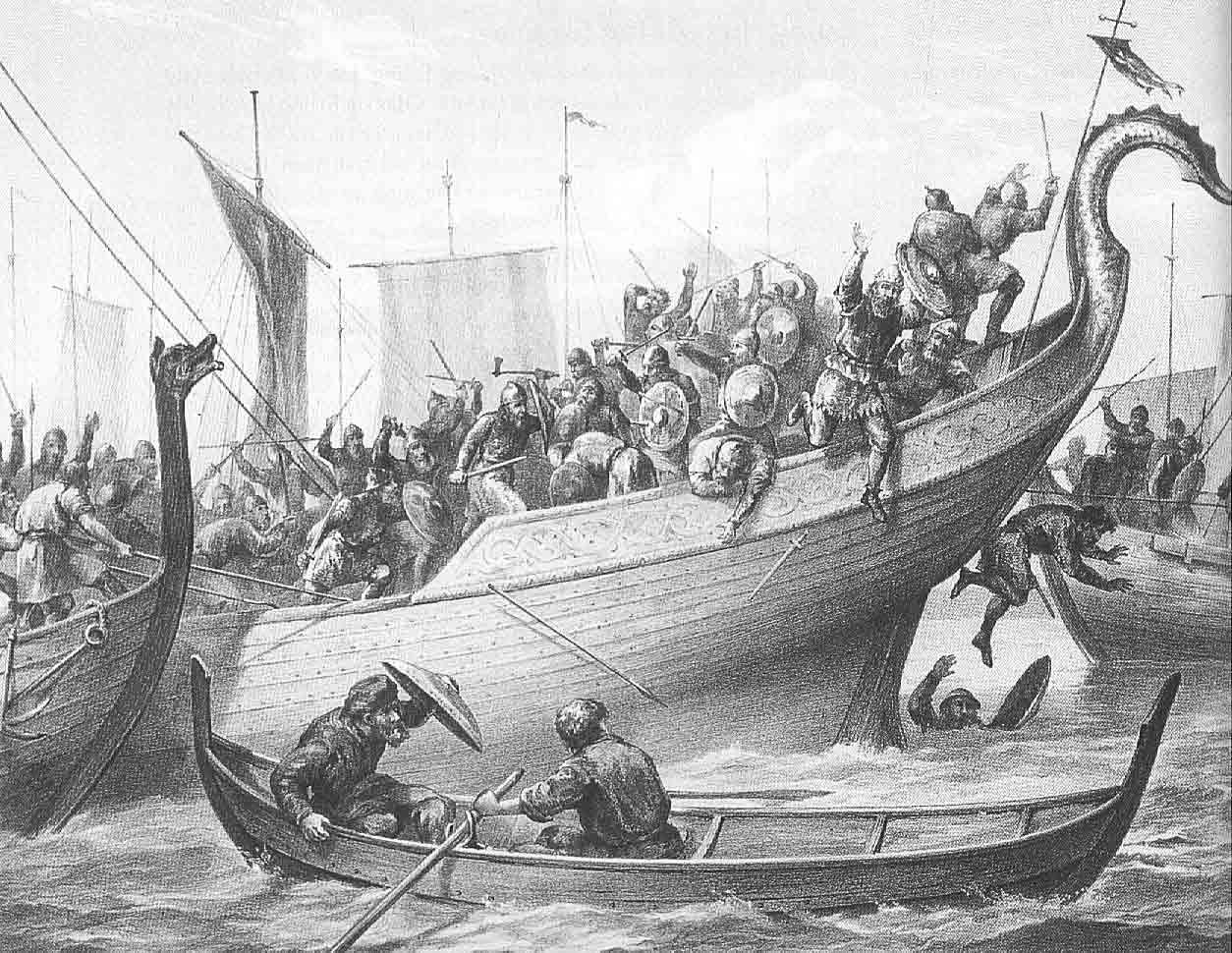
Within Heimskringla, however, there is one tantalizing clue. A single line states: “Now it came to pass as Earl Sigvaldi was making Vold came rowing a skiff, and those therein told unto the Earl how that the fleet of the King of the Danes lay in the haven.” The word “Vold” likely refers to a defensive structure — a fort or earthwork. Several centuries after the battle, King Christian IV built fortifications south of Copenhagen known as Christianshavns Vold. It is plausible — not certain, but plausible — that Christian built atop an older Viking fortification, placing an original “Vold” at the northern end of the strait between the island of Saltholm and Zealand, where the waterway narrows into two strategic pinch points that a fleet could use to block passage.
Who was there, in what numbers, and why?
The sources seem to agree on the principal commanders who sailed against Olaf Tryggvason. Svein Forkbeard, King of Denmark; Olof Skötkonung, King of Sweden, who may have been just a child at that time; and Eirik Hákonarson, Jarl of Lade, from the Trøndelag region of Norway. Historians believe the alliance had been building for years, driven by long-standing Danish ambitions over Norway, political rivalries within the Norwegian nobility, and the disruption caused by Olaf’s aggressive campaign to Christianize his kingdom. But why was Olaf Tryggvason there? And was he traveling north or south? That is a lost detail.
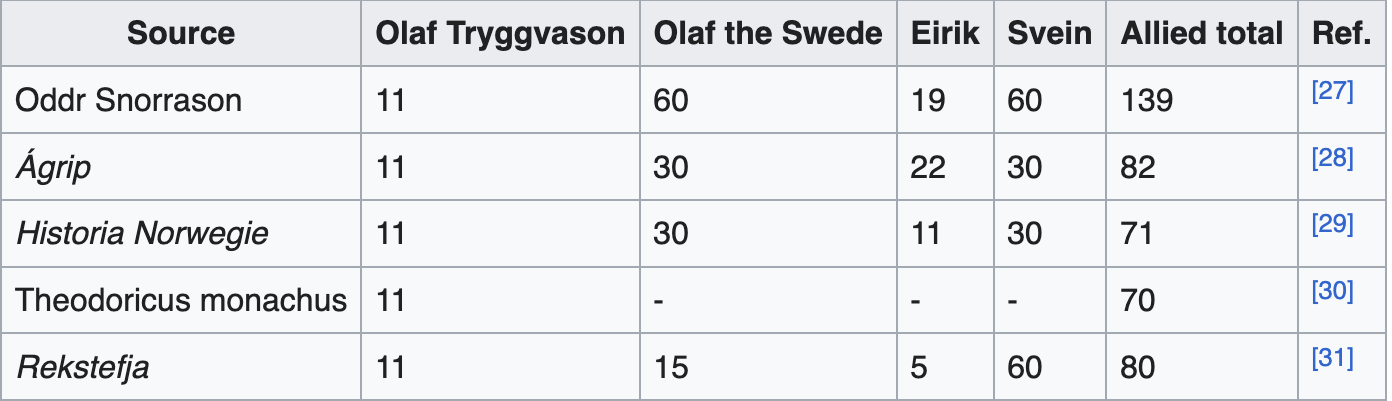
The number of ships also varies considerably. Varying accounts give Olaf anywhere from 11 to 71 ships. Svein Forkbeard and Eirik Hákonarson reportedly commanded an armada ranging from 80 to 139 ships, give or take. As with the date and location, the precise composition of the fleets at Svolder remains contested.
What happened to Olaf Tryggvason?
One of the biggest mysteries is the fate of Olaf Tryggvason, which has dramatic implications for a novelist.
Adam of Bremen and Saxo Grammaticus state plainly that Olaf leaped into the sea and drowned, preferring death to the humiliation of capture. That is the settled Danish version of events.
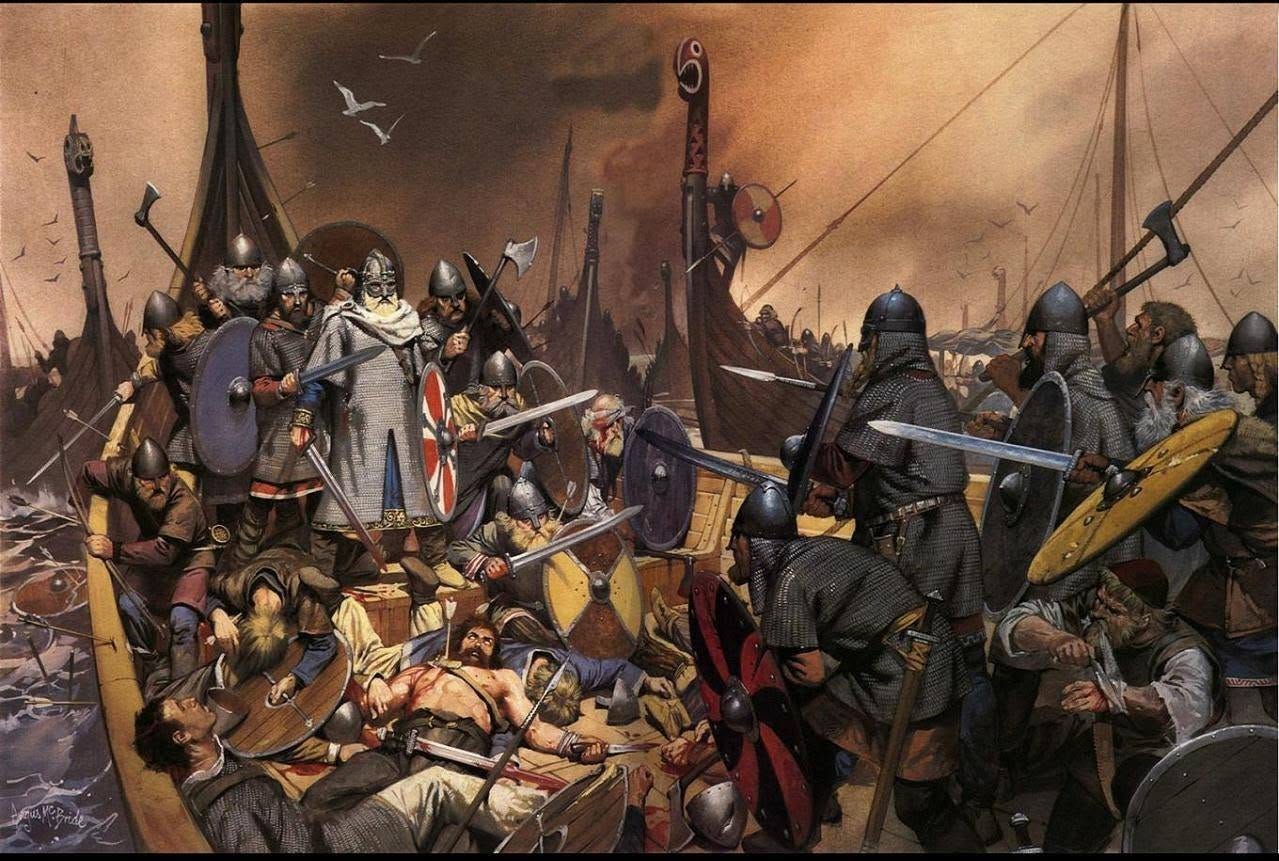
But the Norwegian and Icelandic sources are far less certain. Ágrip — one of the oldest Norwegian kings’ sagas — reports something stranger: that as Olaf stood on the aft deck, a flash of light appeared, and when it faded, he was gone. Other sagas suggest he swam clear of the wreck and was pulled to safety by a passing ship. In some accounts, he later ended his days in a monastery. In others, he made his way to the Holy Land.
So did Olaf Tryggvason die at Svolder or did he escape into legend? A thousand years later, no one can say with certainty.
How to navigate the discrepancies
For an historian, unresolved contradictions are a problem to be solved. For a historical fiction writer, they are an opportunity to weave a story, albeit one handled with care.
Here is the approach I take:
Weigh the sources. Sources differ in perspective and biases. Adam of Bremen wrote from a Danish perspective, with a Danish king as his primary source. The Icelandic sagas were composed centuries after the events they describe, shaped by oral tradition, religious pressures, and quite possibly, political allegiances. Neither is purely reliable. A writer must understand the bias of each source and weigh the evidence accordingly.
Follow the logic of the landscape. When the written sources fail, the physical geography often provides better answers than any saga. An ambush requires a strategic chokepoint. A fleet needs deep water and a defensible position. When I looked at the Øresund and considered where a blocking force could most effectively stop a fleet passing through, the northern strait between Saltholm and Zealand made more sense than other locations. The Heimskringla reference to “Vold” pointed in the same direction. I chose that location for those reasons, but I flag it clearly in my Historical Notes as an inference, not a fact.
Choose and commit. At some point, the author must decide: this is where the battle happened, this is what became of Olaf, this is how the battle unfolded. The decision should be the product of reasoned plausibility given the available evidence. And then you write it with full conviction.
Be transparent. Every book I write includes a Historical Notes section at the back. Its purpose is to separate what the history tells us from what I’ve invented, inferred, or chosen between competing accounts. Readers deserve to know where the record ends and the story begins. That transparency is, I believe, a debt the historical fiction writer owes to the past, and to the reader.
Writing in the dark
The Battle of Svolder is, in many ways, a perfect encapsulation of what it means to write historical fiction set in the murky Viking Age, where facts often get lost in legend. The era is rich with characters, conflict, and drama, but the documentary record is thin, contradictory, and shaped by the agendas of the people who wrote it. Every book I write requires me to make dozens of decisions like the ones described above: where to trust a source, where to question it, where to put more meat on the bones of a person or event, all the while remaining as true to the spirit of the age as I can make it.
That is the challenge. It is also, I confess, a large part of why I love this work.
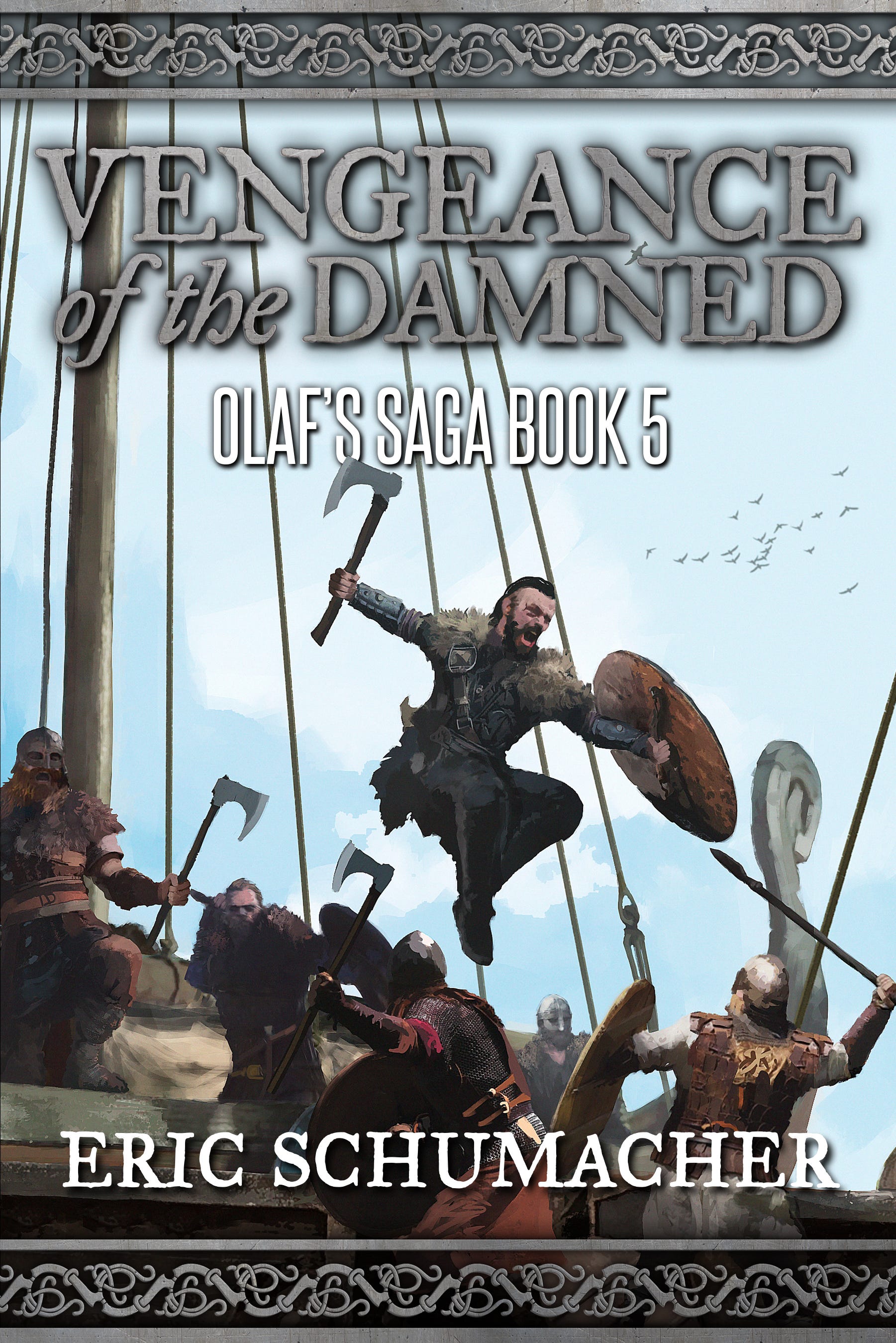
If you want to see how I handled Svolder — the location, the battle, and the fate of Olaf Tryggvason — the answers are waiting in Vengeance of the Damned, the final book in Olaf’s Saga. I’d love to know what you think.
→ Pick up Vengeance of the Damned